Each year, the Center for Teaching chooses six Graduate Teaching Fellows through a competitive application process. Throughout their time in the cohort, Fellows deepen their knowledge of the scholarship of teaching and learning and apply what they learn to develop a campuswide interactive workshop or pedagogical project on a topic of their choice. The Fellows program is co-sponsored by the Graduate College.
We invited our 2026-27 Fellows to answer a few questions. Read more to discover what they hope to learn this year and the teaching approaches they value most.
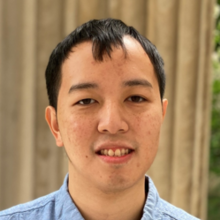
Timothy Yen (Political Science)
I like to employ projects that allow students to work on a topic they are interested in and then apply what we learn in class in relation to that topic.
I’m hoping to learn how to be more encouraging, especially to students who are struggling.

Kayla Leacock (Theatre Arts)
I value play-based learning to encourage students to step outside of their comfort zone and build community
within the classroom. I hope to learn how to adapt each lesson to better meet the diverse needs of my students. I aim to be a flexible and collaborative educator that cultivates a supportive learning environment.
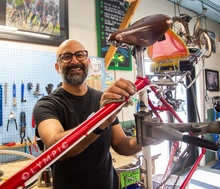
Nikka Singh (Nonfiction Writing Program)
I’ve always loved when a professor can get me to do something or unlock something before I fully understand it on an intellectual level. For me, that often looks like doing generative work or playing with some materials or an idea before they explain it. That gives you the license to play but also removes the pressure of overthinking.
I would love to figure out how to turn my own research and creative practices/projects into lessons I can teach and explore with others as I also work through the material.

Andy Jiahao Liu (Language, Literacy, and Social Studies Education)
Genre-based pedagogy has been and will continue to be an integral part of my writing instruction, as it can effectively help learners write in ways that respond to rhetorical situations and meet genre expectations.
As a graduate teaching fellow, I look forward to deepening my understanding of evidence-based teaching, learning effective strategies to interpret my teaching evaluations to inform future instruction, and developing skills in preparing teaching portfolios.

Hailey McCoy-Munger (Biomedical Engineering)
I believe being a talented engineer is synonymous with being a talented problem-solver. As such, an important teaching practice to me is problem-solving based instruction. I find that teaching students strong problem-solving strategies allows them to take core engineering concepts and apply them to seemingly complex biomedical problems.
I hope to learn teaching strategies employed in disciplines outside of engineering. I think that this diverse group will provide knowledge and context about what works with students of other academic backgrounds. I hope I can adopt some of these practices and apply them to engineering education, ideally making instruction less daunting and more accessible to students.
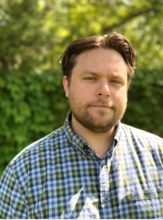
John Tappen (American Studies)
Inquiry-based learning is important to me. Questions are foundational not only to good discussion, but knowledge production in general. In my teaching, I like to foreground asking questions as a skill and have students consider how to develop good questions.
I’m excited to explore effective models of teaching writing as a process integral to thinking and learning. I’m especially interested in learning how to foreground writing-as-thinking across disciplines.