This is the first installment of the Scholarship of Teaching and Learning (SoTL) Scholars Spotlight Series, which features updates from faculty members designing, implementing, and disseminating meaningful SoTL projects.
We’re delighted to feature Dr. Theodora (Dora) Kourkoulou, who teaches Teaching and Learning Technologies, a core course required for the College of Education’s Teacher Education Program. Dr. Kourkoulou’s SoTL project focuses on how students can work more intentionally with artificial intelligence (AI) by engaging with customizable tools and treating AI as a resource for thinking rather than simply a source of answers.
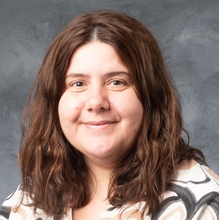
Tell us what you teach, what inspired your SoTL project, and what it focuses on.
Most students take the teaching and learning technologies course I teach early in their program. It introduces the concept of technology integration and how to use technology to teach. The idea for my SoTL project emerged from noticing how students engaged with artificial intelligence. I realized that while many students were familiar with the rhetoric of AI as a creative partner, they often lacked a clear understanding of how to use it creatively or thoughtfully. In practice, this meant relying on surface-level prompting – enter a prompt, receive a response, and move on without deeper processing or engagement. Ultimately, the goal is to help these future teachers foreground pedagogy over technology by clarifying their teaching values and principles first and then making intentional decisions about how and when AI can support their practice.
How has your disciplinary expertise shaped your approach and process of conducting your SoTL study?
I am fascinated by narratives of play in education, especially those that define play in relation to culture, structure, and power. Early in my academic journey, this interest took shape through gaming, as gaming was then a dominant way to think about playfulness in learning with technologies. While gaming remains important, playfulness in education has since shifted, particularly toward AI. This evolution directly informs my SoTL project, which explores how creativity emerges within AI structures when learners are encouraged to experiment, play, and get creative. I often tell my students I want them to be playful and creative – to see our classroom as a space where exploration matters more than rigid adherence to rubrics. In engaging playfully with AI – testing its limits, questioning its outputs, and even “breaking it,” students develop a deeper understanding and more meaningful interactions with it.
How has the Center for Teaching helped you move your SoTL project forward?
The center has been integral to this work, from shaping my research questions, to my early conversations with Associate Director Sara Nasrollahian, to the ways the SoTL community gradually formed, Assistant Director Allie Brandriet joining the team, and Center for Teaching Graduate Assistant Yetty Mabadeje’s incredible work in helping to disseminate the projects.
I especially value how intentionally the center builds community. The connections I have made through the SoTL community have been invaluable, especially on a large campus like this. The ongoing SoTL community meetings, including workshops, retreats, and writing sessions, have also been profoundly helpful.
How do you envision your project contributing to teaching and learning at Iowa or more broadly?
I hope this work provides best practices on teaching with AI, not only for future teachers, but for future professionals and undergraduate students, by helping learners interact with and understand this technology’s true creative dimensions. While many educators are “doing something” with AI, that doesn’t necessarily mean we are developing shared or principled knowledge about how AI should shape future teaching decisions. The data I have gathered to this point suggest something encouraging: these future teachers are not simply adopting AI uncritically but are pushing back thoughtfully. They are asking deeper questions about knowledge, assessment, and what it means to truly learn in the presence of AI.
What advice do you have for faculty who are curious about some aspects of their teaching but are not yet familiar with SoTL?
As part of last spring’s SoTL Institute, Dr. Susannah McGowan visited, and she encouraged me to continue writing reflective journals after my teaching. That practice proved essential, clarifying both the problem I noticed and the research questions that eventually emerged. As a result, the advice I would offer others is to remain genuinely curious about their students, to be in the moment, and to engage with the problems that surface rather than the ones they expect to find. Be curious when you are in the field for a SoTL study; the field is both the classroom and other everyday interactions with students. It is often through careful attention to these spaces that the most generative questions emerge.
Interested in pursuing your teaching and learning curiosities and turning them into a SoTL study? The Center for Teaching can support you as you develop your SoTL ideas, research questions, project design, or methods. To learn more or schedule an individual SoTL consultation, contact us at teaching@uiowa.edu or visit our website to explore upcoming SoTL programs.
We also invite you to attend our SoTL Institute on Friday, April 10. This campus-wide event features keynote speaker Dr. James Lang, a nationally recognized expert on teaching and learning and the well-known author of Write Like You Teach and Small Teaching, along with networking opportunities, and a SoTL poster session.